
The last numbers reported by consultancy agencies on Private Equity markets are not particularly exciting:
- Number of deals decreased sharply in 2022 and Q1 2023
- Most firms are focusing now either on lower-size deals or mega deals, showing a lack of confidence
- According to most PE investors surveyed, the ROI of the past 5-7 years was below expectations
- Valuations are (finally) starting to adjust
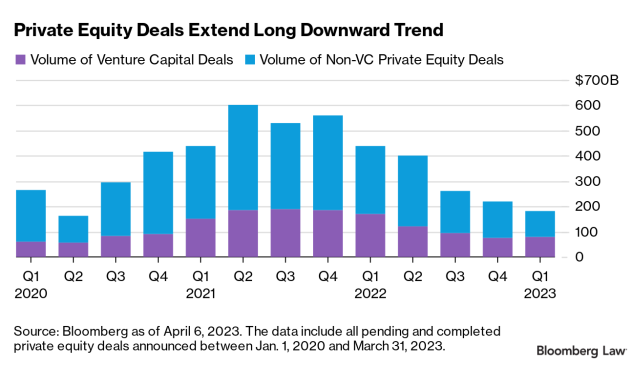
Is it surprising? Not really…
Private equity can add value to portfolios but marketing narratives have become pervasive in recent years: consistent overperformance in all market environments, unrivaled flexibility, access to niche opportunities, diversification, alignment of interests with underlying firms, incredible due diligence process…you name them.
PE funds definitely have more flexibility in terms of scope. They can access more opportunities than the average investor, that’s for sure. But they are constrained by their structure.
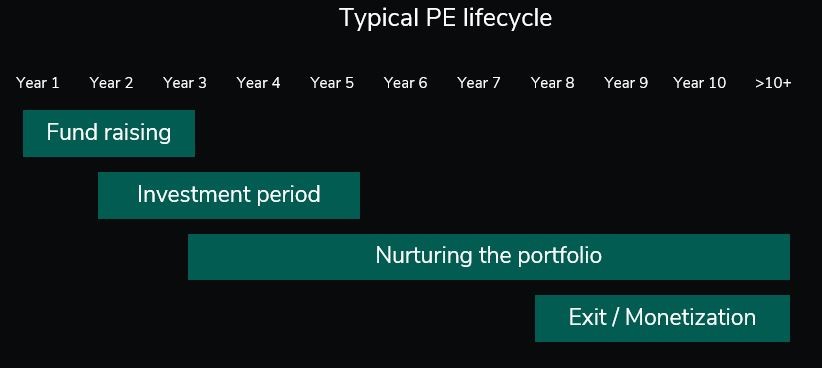
PE funds typically have a very finite lifecycle that introduces timing risk. A stereotypical lifecycle looks like this: 1-2 years to raise funds, 2-5 years to source and close deals, 3-7 years to nurture the portfolio of companies and finally a couple of years to divest the portfolio.
What it means is that the return of the fund depends on the difference between the price at which the underlying companies are acquired during the investment period and sold at the end of the tenor… And this price is very much dependent on the economic conditions prevailing at the time. The worst vintages tend to be the ones that precede crisis (for example funds that were launched in the 2000s or 2005-2007) and the best tend to be the ones that immediately follow them.
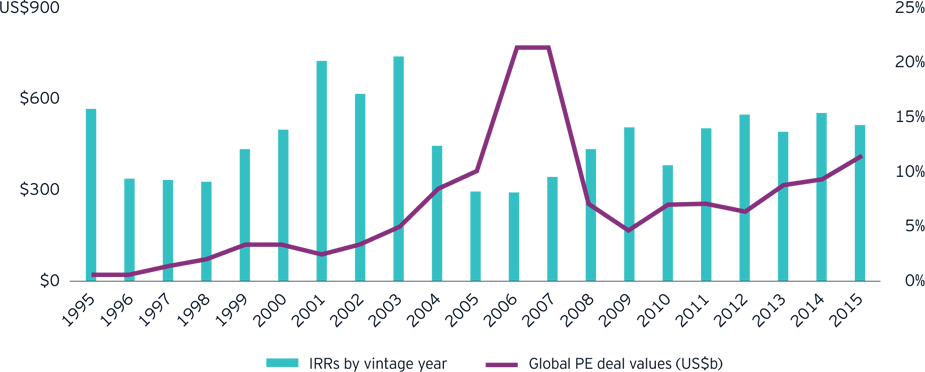
The issue is that it is also usually toward the end of the cycle that capital tends to flow into PE funds. The consequence: more deals are being closed at higher prices which reduces the prospects of higher returns. This phenomenon has been aggravated by the fact that, in recent years, more transactions happened in closed-loop systems (basically PE firms selling to other PE firms and sometimes… to themselves).
The quality of due diligence also decreases during economic booms (look at the number of VC and PE firms caught in the FTX scandal for example). When economic conditions reverse, PE funds are not immune, on the contrary. After all, what they invest in is what makes the economy.
When the tide goes out, this is where you would expect them to seize opportunities. But, if previous vintages are suffering, you observe less appetite both from the investors and managers to take risks. Commitments are pulling back, dry power inventory jumps, and money flows toward largest funds. And it is ultimately bad for the underlying companies as they struggle to raise money when they need it the most (the number of PE-backed companies expected to go bankrupt is expected to rise in 2023). Interests are often more aligned when valuations go up.
Now that we cut through some of the myths, where do we go from there?
- First, lower your return expectations for recent vintages
- Let time for valuations to adjust further and then refine your conclusions on private markets’ outperformance
- If you like the asset class, choose carefully your PE partners. Lower valuations will provide opportunities.