
The Swiss National Bank started to raise rates to curve inflation. We don’t know how many more hikes will be needed at this stage, but tightening credit conditions put pressure on different market segments, and real estate is one we don’t talk about enough.
Higher rates = less enthusiasm
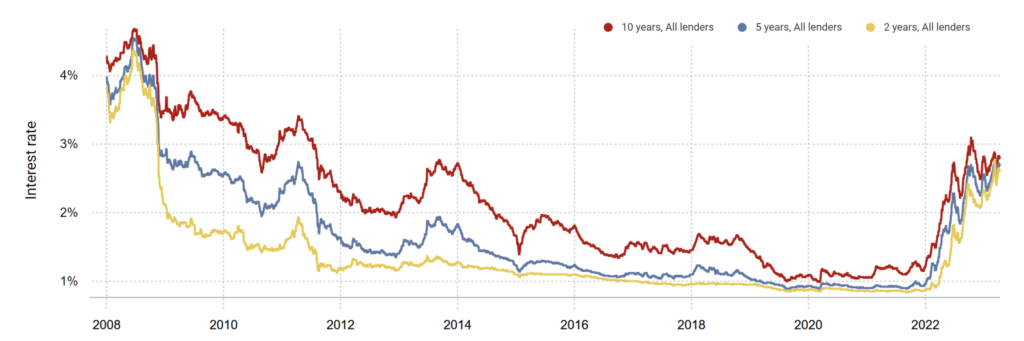
At the time of this writing, the SNB policy rate is at 1.50%. While the yield on a 10-year government bonds is around 1.27%, the average rate for a 10-year fixed-rate mortgage is about 2.79% according to Comparis. In comparison, the rate on a mortgage with the same maturity 2 years ago was 1.19%. Which means that it costs 2.3x more today to service your debt. This is a headwind for people looking to take a new mortgage or refinance their debt. Potential buyers may think twice before purchasing a house.
Especially when real estate is not in everyone’s budget
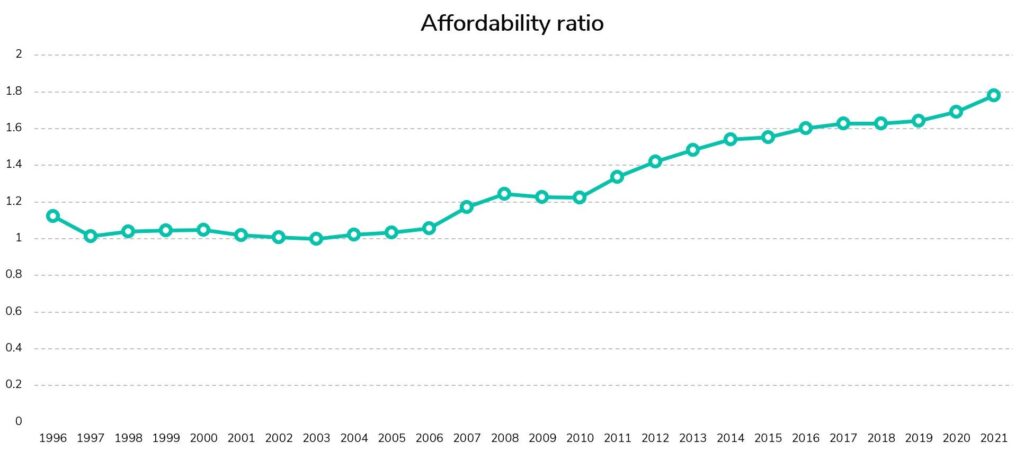
That’s no secret to anybody; over the past 25 years, real estate prices have gone up in Switzerland at a faster pace (2.5% p.a. over the past 26 years) than income (0.70% p.a. over the same period for the median salary). The chart below shows how affordability has deteriorated over time.
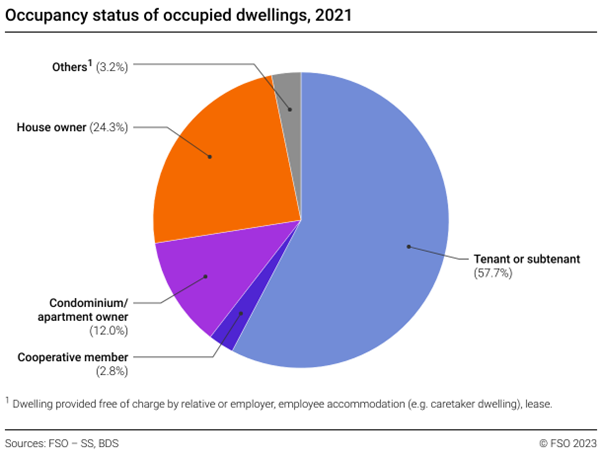
As a result, there is a higher proportion of tenants in Switzerland (57.7%) than of owners. Affordability is not the only reason for this, but it is the most frequently put forward. Others argue that renting is a model that works, so there may be a bit of complacency, or at least economic arguments.
More expensive because scarcer? Really?
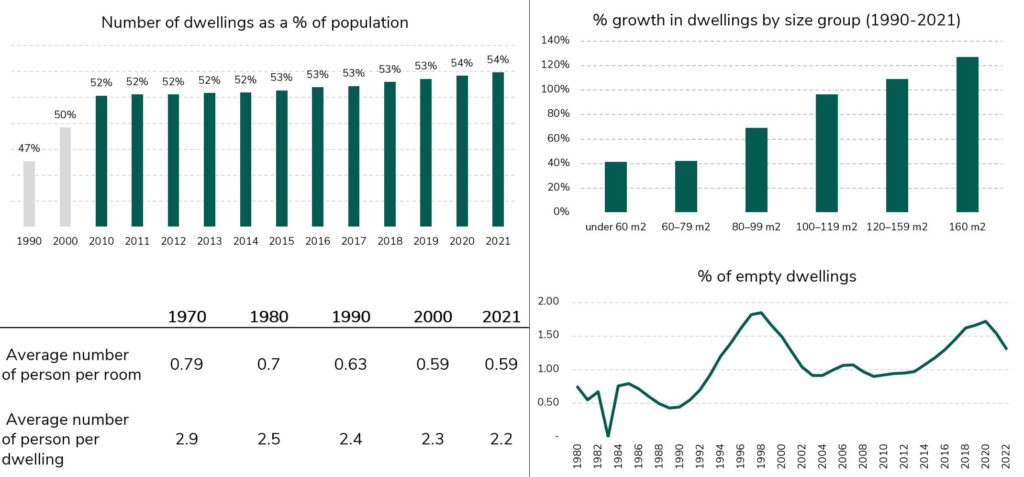
Ask anyone in the real estate sector why prices are so high, and you will hear the same answer: “little supply, strong demand”. Scarcity is the main argument, and it comes in different flavors: green pressures to rarify building land, political conflicts, laws and regulations, delays to get new permits (on average between 5.4 and 7.9 months), construction costs, labor shortage, positive net migration, etc. However, one interesting element is that the number of dwellings, as a % of the population, has increased over time. More dwellings delivered and bigger ones! Another interesting point is that the % of empty homes is above the historical average (1.31% in 2022 vs. 1.07% on average). So scarce, maybe, but not scarcer, at least for now.
What’s next?
The big question is: what is next? What will become scarcer first: supply or demand?
Short-term indicators seem to point in the direction of lower supply. The construction costs have risen because of inflation, and it is getting harder to get access to new lands.
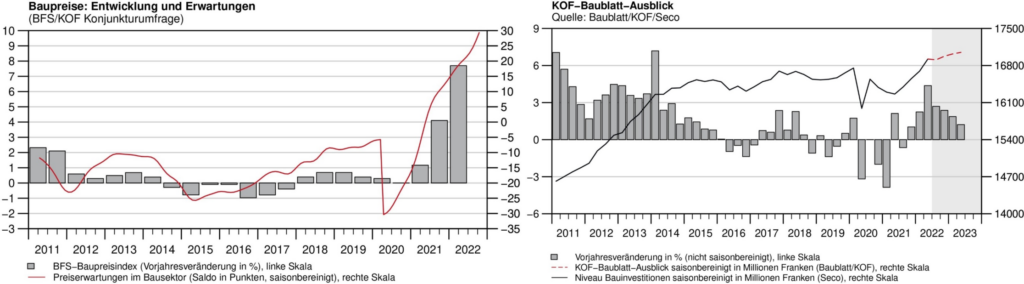
 Construction costs and outlook for investments, source KOF, Baublatt
Over the long term, things are looking a bit different though, especially when we factor in demographics.
The bulk of the dwelling stock is in the hand of an aging population. The average owner age is 58. If you combine the chart above with life expectancy data (unless we find a solution to become immortal in the next few years) a lot of houses and apartments are likely to hit the markets in the next 15 years, more than a third of the stock as per my estimation. And I believe this fact is overlooked.
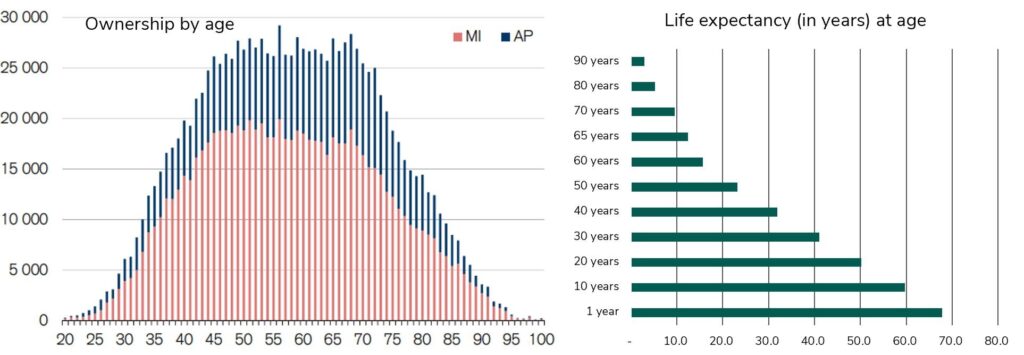
 Source: Credit Suisse 2018, Federal statistical office: 2022
What about supply?
From a demand point of view, rising interest rates may dissuade many potential buyers, especially if prices remain high. Wealthy individuals, companies, insurers and pension funds own a good proportion of the rented dwellings. All were looking at ways to generate income in a low-rate environment and real estate was a compelling option (as opposed to bonds). But now that interest rates are getting higher and you can get the same kind of yield by just parking your cash into good quality bonds, what is their incentive?
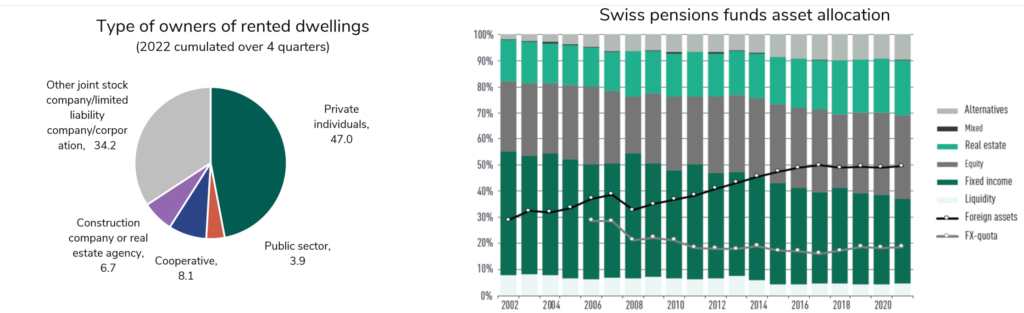
Add to this the recent stress on banking system. Switzerland is one of the country in the world with the highest mortgage debt (More than 150% of the GDP). Around 45% of household wealth is invested in real estate, and mortgage loans account for a full 95% of household debt. Roughly 95% of mortgage loans are granted by banks. Rising rates and increasing credit risks have an impact on the lending business. Most swiss banks assume impairments of residential mortgages will rise in the short term.
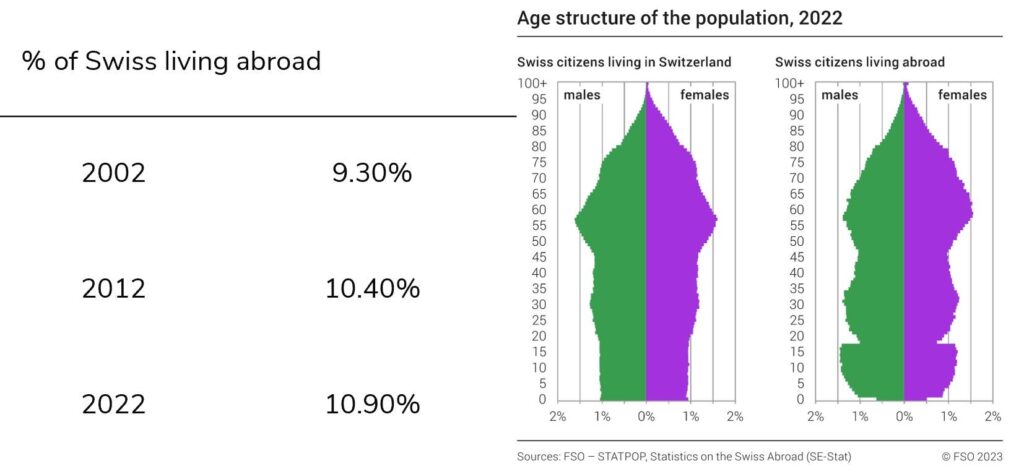
Finally, over the long run, trends in demographics are not particularly favorable either. The number of Swiss living abroad is increasing and many seniors are considering spending their retirement outside Switzerland. Of course net migration is still positive, which can compensate for emigration and low birth rate, but foreigners can usually buy a house only after a certain period of time.
To conclude:
While many argue that the real estate market in Switzerland is rock solid, I believe it is facing a lot of headwinds. I would not be the least surprised to see prices going down in the coming years.